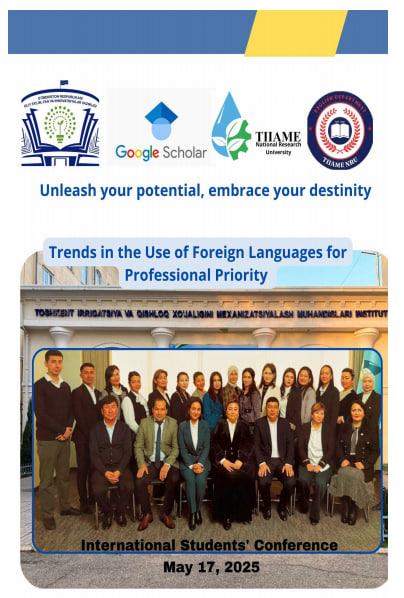
THE IMPORTANCE OF ENGLISH IN ADDRESSING YOUTH UNEMPLOYMENT IN UZBEKISTAN
https://doi.org/10.5281/zenodo.15667059
Keywords:
Youth Unemployment, Education System, Job Opportunities, Economic Growth, Social Stability, Employment PoliciesAbstract
Youth unemployment is a significant issue in Uzbekistan, affecting both the
economy and society. High unemployment rates among young people create
challenges for national development, as they limit personal growth and contribute to
social instability. This study examines the causes and consequences of youth
unemployment in Uzbekistan and proposes strategies to address the issue. Key
factors include educational reforms, skill development programs, and the creation of
job opportunities. The paper aims to provide actionable solutions to reduce youth
unemployment and promote sustainable economic growth. Knowledge of English
significantly increases young people's chances of finding good jobs both in the local
and international labor markets.
References
. World Bank. (2020). Youth Employment in Uzbekistan: Challenges and
Opportunities. Retrieved from https://www.worldbank.org
UNDP Uzbekistan. (2021). Youth Employment and Skills Development in
Uzbekistan. United Nations Development Programme. Retrieved from
ILO. (2020). Promoting Youth Employment in Uzbekistan: The Role of
Vocational Education and Training. International Labour Organization. Retrieved
from https://www.ilo.org
Kamalov, N. (2021). Socio-Economic Challenges Facing Uzbekistan’s Youth: An
Analysis. Journal of Economic Development, 25(2), 135-150. 5. Tashkent State University of Economics. (2020). The Impact of Digital Divide on
Youth Employment in Uzbekistan. Tashkent. Retrieved from http://www.tsue.uz
Ministry of Employment and Labor Relations of the Republic of Uzbekistan. (2020). Youth Employment Strategy: Addressing Unemployment in Uzbekistan. Retrieved from http://www.minemp.uz
Shonazarov, A. (2022). COVID-19 and Its Impact on the Youth Employment in
Central Asia: A Case Study of Uzbekistan. Central Asian Economic Review, 34(4), 89-104